Silver Knowledge · 10 min read · 925s.ai
What Does 925 Mean on Silver?
Last updated
It's the most common stamp you'll find on silverware — but 925 is just the beginning of the story. Every mark on a piece of silver has something to say about who made it, where, and when.
The Quick Answer
925 means the item is sterling silver — 92.5% pure silver and 7.5% copper. The number is a millesimal fineness mark: 925 parts silver per 1,000. Any piece stamped 925, .925, or "Sterling" is genuine solid silver. Plated pieces are stamped EPNS, EP, or "Silver Plate" instead — never 925.
If you've ever flipped over a silver spoon, bracelet, or tea set and squinted at a tiny stamped number, you're not alone. The 925 mark is one of the most searched questions in the world of antiques — and for good reason. It's the gateway to understanding whether what you're holding is genuinely valuable, historically significant, or just a pretty piece of metal.
Here's everything the 925 stamp means — and everything else the marks around it are quietly telling you.
What does a 925 silver stamp on silver mean?
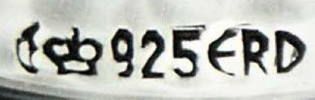
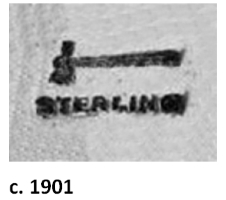
A 925 silver stamp — sometimes written ".925", "S925", or alongside the word "STERLING" — is a maker's certification that the piece is sterling silver. Whether you see it tucked inside a ring shank, struck on the back of a spoon, or stamped under a teapot's foot, the meaning is the same: 925 silver markings tell you the metal is 92.5% pure silver by weight. The other 7.5% is alloy (usually copper, sometimes zinc or nickel) added for strength — pure silver alone is too soft to hold a fork's tine or a ring's setting.
The Short Answer: 92.5% Pure Silver
What does 925 stand for?
925 stands for 92.5% pure silver. It's a fineness number — parts per thousand of pure metal. So a piece stamped 925 is 925 parts silver to every 1,000 parts of metal, with the remaining 75 parts being copper (or occasionally zinc) added for durability. This is the international standard for sterling silver, used in everything from jewellery to flatware to hollowware.
The number 925 is a millesimal fineness mark — a system that expresses metal purity in parts per thousand. So 925 means the item contains 925 parts silver out of 1,000, or 92.5% pure silver. The remaining 7.5% is typically copper, though zinc or nickel may also be used. This combination is what the world knows as sterling silver — the standard for quality silverware, jewellery, and tableware for over 700 years.

Three stamps on silver: a guarantee mark (crown), the 925 fineness number, and a maker's mark. Wikimedia Commons (GFDL)
A Standard Seven Centuries in the Making
The 925 sterling standard is one of the oldest material specifications still in active use anywhere in the world. It traces back to King Edward I of England in 1275, who first legislated minimum silver content for coinage. By 1300, the statute had expanded to all silver articles — any piece that didn't meet the standard couldn't be sold.
In 1544, under Henry VIII, the lion passant — a walking lion with one paw raised — was introduced as the official stamp of authentication. It remains in use today. When you see that lion on a piece of British silver, you're looking at a mark with nearly 500 years of continuous history.
Not All Silver Is 925 — The Global Standards
Here's where it gets interesting for collectors and appraisers: different countries have used different purity standards throughout history. A piece stamped 800 isn't "fake" — it's just European. A piece stamped 84 isn't a low number — it's Russian. Knowing the standards is essential to understanding what you're holding.
| Mark | Purity | Where It's From | Notes |
|---|---|---|---|
| 999 | 99.9% | International | Fine silver — too soft for most functional items |
| 950 | 95% | France, Japan, Netherlands | French 1st Standard; also Britannia silver in the UK |
| 925 | 92.5% | UK, USA, International | Sterling silver — the most widely recognised standard |
| 916 ("88") | 91.7% | Imperial Russia | Fine Imperial Russian silver — zolotnik "88" pre-1927 |
| 875 ("84") | 87.5% | Russia / Soviet Union | Most common Russian standard — zolotnik "84" pre-1927 |
| 830 | 83% | Scandinavia | Common in Norwegian, Danish, and Swedish silver |
| 800 | 80% | Germany, Italy, Continental Europe | The standard minimum across most of Europe |
The British Hallmark System: Four Marks, One Story

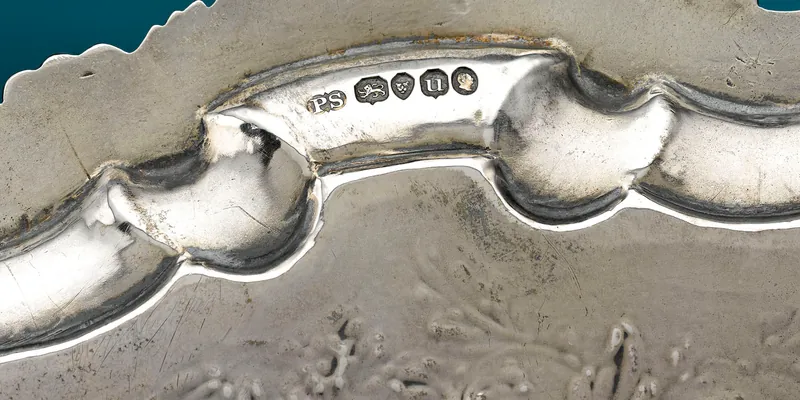
Four British hallmarks in a row: N·M (maker Nathaniel Mills) · lion passant · date letter · anchor (Birmingham assay). Birmingham, 1845. Wikimedia Commons (CC BY-SA)
On British silver, a full set of hallmarks typically consists of four distinct marks. Together, they tell you almost everything you'd want to know about a piece.
1. The Maker's Mark
Usually two or three initials in a shaped cartouche (shield, oval, rectangle). This identifies the silversmith or manufacturer. On significant pieces, a recognised maker — Paul Storr, Hester Bateman, Paul de Lamerie — can dramatically increase the value.
2. The Standard Mark
On English silver, this is the lion passant. On Scottish silver, a thistle. On Irish silver, a crowned harp. On post-1975 pieces, you may see the millesimal fineness number (925) instead of or alongside the symbol.
3. The Assay Office Mark
Silver in Britain had to be tested and stamped at an official assay office. Each office had its own symbol:
4. The Date Letter
A single letter in a shaped shield, changed each year by the assay office. Date letters allow experts to pinpoint the year a piece was hallmarked — sometimes to a specific 12-month window. A complete set of hallmarks is worth significantly more than a piece with worn or partial marks.
Russian Silver: The Zolotnik System
Russian silver deserves its own section — because it uses a completely different numbering system, and it's one of the most commonly misidentified silver in the market. Imperial Russian and Soviet-era pieces are abundant, beautifully made, and frequently undervalued simply because buyers don't recognise the marks.
Before 1927, Russia used the zolotnik system — a traditional unit where 96 zolotniks equalled pure silver. Rather than expressing purity per 1,000 parts, Russian hallmarks expressed it per 96:
| Zolotnik Mark | Equivalent Purity | Millesimal | Notes |
|---|---|---|---|
| 91 | 94.8% | ~948 | Highest grade Imperial Russian silver |
| 88 | 91.7% | ~916 | Common in fine Imperial pieces |
| 84 | 87.5% | 875 | The most common Russian standard |
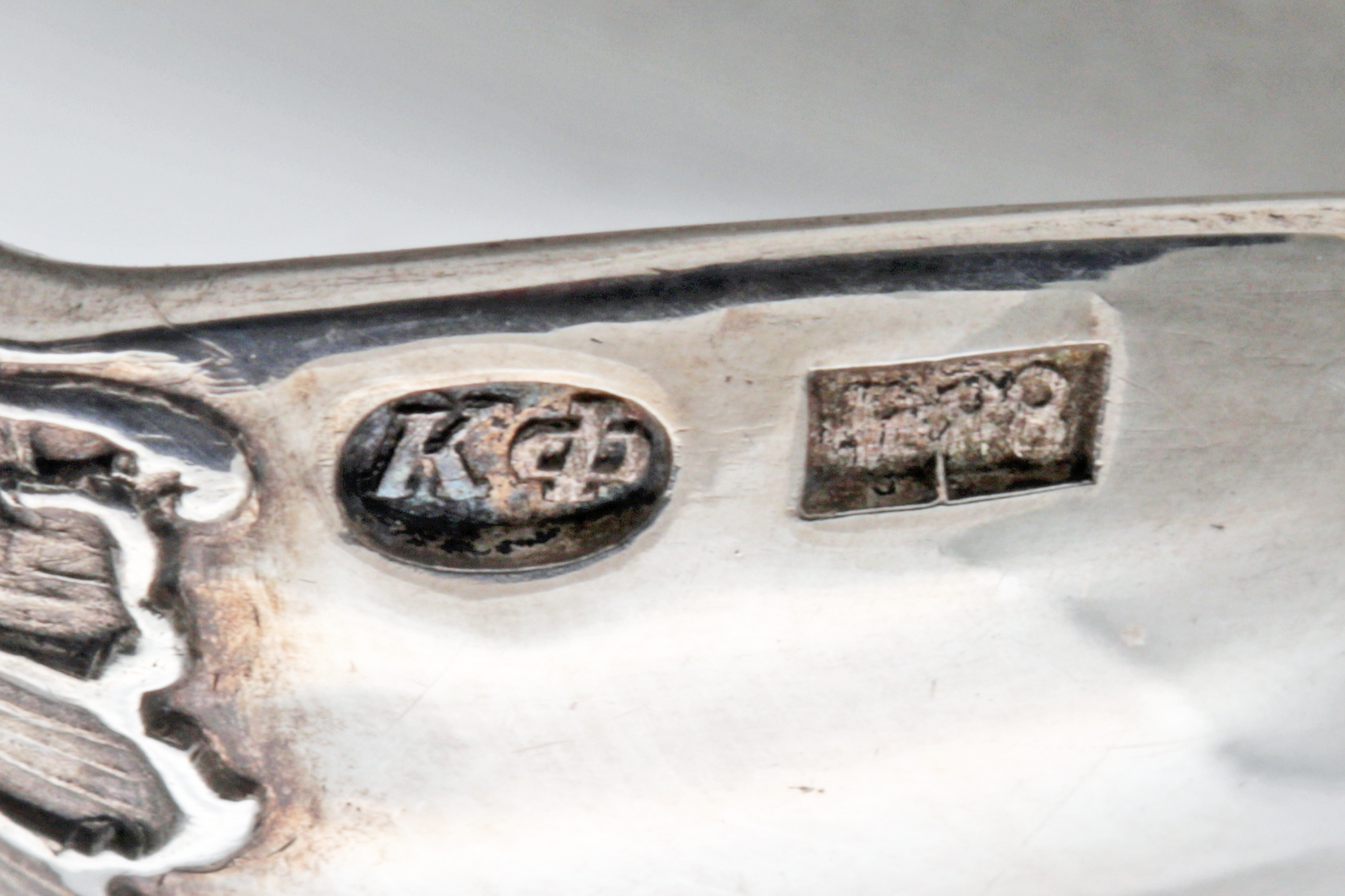
Hallmarks on a Fabergé piece: the Kokoshnik mark (woman's profile, left), КФ maker's mark, and 88 zolotnik stamp. Wikimedia Commons (CC BY-SA 4.0)
The Kokoshnik Mark
The most distinctive feature of Russian silver is the Kokoshnik mark — a woman's profile in a traditional Russian headdress, introduced in 1896. It appears alongside the zolotnik number and the assay office initials (in Cyrillic). This mark is the Russian equivalent of the British lion passant: your primary confirmation that the piece is genuine, state-assayed silver.
After the Russian Revolution, the Soviet Union transitioned to the millesimal system in 1927. Soviet pieces are typically marked 875 or 916 — so a piece marked 875 could be Soviet-era, or could be German. Context, style, and accompanying marks are everything.
Found a stamp on your silver but can’t decode it? Upload a photo and our AI will identify the marks, the country of origin, and a likely value range — in minutes.
Identify my silver →European Silver: A Continent of Different Standards
Antique silver from continental Europe is rich, varied, and follows regional traditions that evolved independently from the British system.
Germany & Austria
German silver is most commonly marked 800 or 830. From 1884 to 1905, Germany used a distinctive state guarantee mark: a crescent moon and crown (Halbmond und Krone) alongside the fineness number. Austrian pieces often carry the head of Diana as the state control mark.
France
French silver uses a layered system of guarantee marks. The owl mark was introduced in 1893 for imported silver; the Minerva head confirms domestic pieces. French first-standard silver is 950 — notably higher than British sterling. Second-standard French silver runs at 800.
Scandinavia
Norway, Sweden, Denmark, and Finland traditionally used 830 as their primary standard. Scandinavian pieces often feature clean Art Nouveau and mid-century modern designs — their hallmarks typically include the maker's initials, city mark, and year in a simple, legible format.
Netherlands & Belgium
Dutch silver is typically 833 or 925, marked with a lion rampant and a detailed town/city mark. Belgian silver most commonly runs at 800 or 833. Both traditions produced exceptional decorative silverware in the 17th–19th centuries.
Italy
Italian silver spans 800, 925, and 950, with a star-and-number system introduced in the 20th century. Older Italian pieces from the 16th–18th centuries often carry city marks and guild stamps that require specialist identification.
Sterling vs. Silver-Plated: The Mark That Changes Everything
The most important distinction in silver collecting isn't purity — it's whether the piece is solid sterling or silver-plated. Plated pieces have a thin coating of silver over a base metal (usually copper or nickel). They look identical to the untrained eye, but the value difference is enormous. Our guide to telling sterling from silver plate covers the five definitive tests.
The marks on silver-plated cutlery: EPNS (Electroplated Nickel Silver), A1 (quality grade), Silver Plate, and EPBM (Electroplated Britannia Metal). None are legal hallmarks.
What to look for: genuine sterling silver carries a hallmark (925, lion passant, zolotnik number, etc.). Silver-plated pieces are often stamped EPNS (Electroplated Nickel Silver), A1, or simply Plated. Some plated pieces have no marks at all, or marks that imitate silver hallmarks — a common source of confusion in charity shops and estate sales.
How Hallmarks Affect Value
A piece of antique silver with a complete, legible set of hallmarks is worth significantly more than an identical piece with worn or missing marks — even if both contain the same amount of silver. For a deeper look at how marks, maker, and condition affect price, see our complete antique silver valuation guide.
Provenance. Hallmarks confirm authenticity and origin. A complete mark is proof the piece passed official assay — it wasn't faked, and it meets standard.
Age. Date letters let experts (and AI) pin down the decade or year of manufacture. A Georgian silver candlestick from 1790 commands a very different price than a Victorian reproduction from 1890, even if they look identical.
Maker. Identified maker's marks — especially well-known silversmiths — add a collector's premium. A plain spoon and a Paul Storr spoon of the same period and weight can differ in value by thousands. For one prestigious maker that consistently commands a five- to twenty-fold premium over silver melt value, see our guide to Tiffany silver marks.
For the practical mechanics of reading those marks on British silver specifically, our guide to how to read British silver hallmarks walks through each office's town mark, date letters, and the lion passant.
What is 925 silver worth? (Value by weight)
925 sterling silver has a hard floor set by the current silver spot price. At today’s spot — $56.96/oz troy for pure silver, which works out to about £1.27/g of sterling — here’s what common 925 silver items are worth in pure metal value alone, before any maker premium or collector premium.
Silver spot price: $56.96/oz troy · as of 2026-10-18
| Piece | Typical sterling weight | Melt value at spot (£, approx.) |
|---|---|---|
| 925 silver ring (single band) | 3–6 g | £3.82 – £7.63 |
| 925 silver teaspoon | 20–30 g | £25 – £38 |
| Sterling silver tablespoon | 60–80 g | £76 – £102 |
| Sterling silver candlestick (single) | 200–350 g | £254 – £445 |
| Sterling silver teapot | 400–600 g | £509 – £763 |
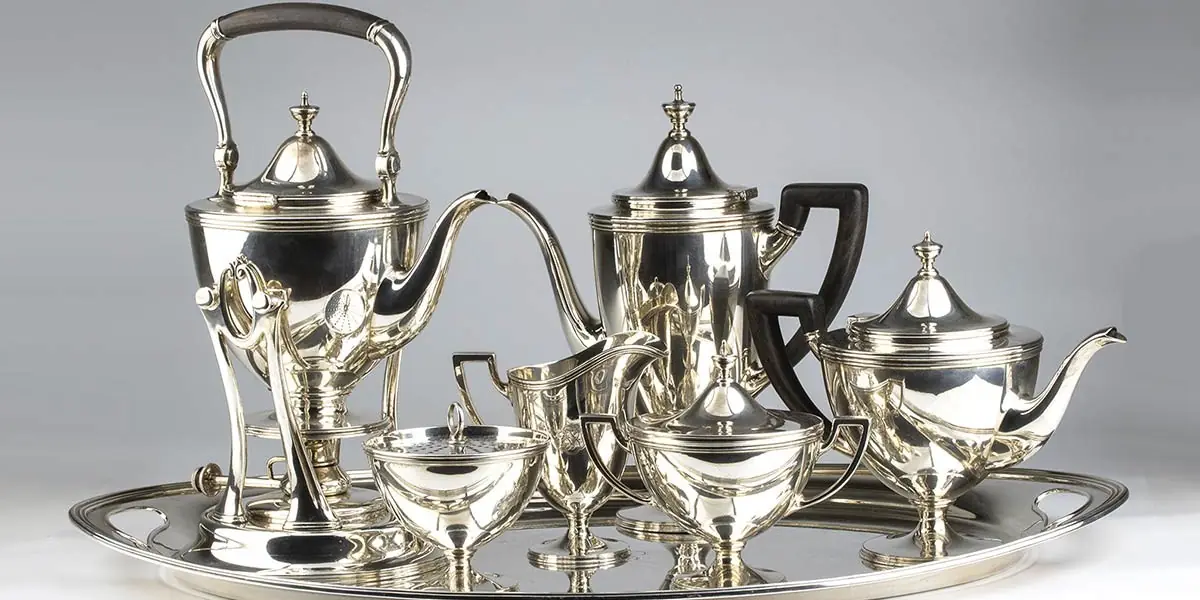
| Full sterling silver tea service (5-pc) | 1500–2500 g | £1908 – £3180 |
Above this floor comes the maker premium. An anonymous or generic sterling piece sells at or slightly above melt value. A recognisable Victorian or Edwardian maker (Elkington sterling, Mappin & Webb) adds a 1.5–3× multiplier. Georgian or top-tier makers (Paul Storr, Hester Bateman, Tiffany & Co.) can add 5–20× — five-figure prices for complete services are routine at auction. For the full formula — maker plus condition plus completeness plus provenance — see our guide to how much is my antique silver worth.
925 vs other silver marks: which is which?
The 925 stamp is the international sterling standard, but it isn't the only silver purity mark you'll encounter. Here's how the main numeric marks compare, and how they differ from silver plate marks that aren't solid silver at all.
| Mark | Silver content | Solid or plated? | Where you find it |
|---|---|---|---|
| 925 (or .925) | 92.5% (sterling) | Solid | International sterling standard — USA, UK modern, jewellery worldwide |
| 800 | 80% | Solid | German, Italian, some Continental European silver |
| 900 | 90% | Solid | French second standard, some Continental antique silver |
| 958 (Britannia) | 95.8% | Solid | British Britannia standard — mandatory 1697–1720, voluntary since |
| EPNS | 0% (surface only) | Plated | British silver plate — base metal with thin silver skin |

Reading Your Silver in Practice
Most hallmarks are tiny — 2 to 5mm — and often placed in inconspicuous locations: the back of a teaspoon bowl, the underside of a sugar bowl, inside the shank of a ring. A jeweller's loupe (10x magnification) is the traditional tool. Today, a decent smartphone macro photo can reveal marks that are invisible to the naked eye.
If you can get a clear image of the hallmarks, an AI appraisal tool like 925s.ai can cross-reference the marks against international databases — British, Russian, German, French, Scandinavian — identify the assay office and date range, attribute the maker where possible, and provide an estimated value range. All from the photo. If you just want the marks read without a full valuation, our dedicated silver hallmark identifier does that step on its own.
The Bottom Line: What 925 Means on Silver
925 means sterling silver — 92.5% pure silver and 7.5% copper, by international standard. Any piece stamped 925 is solid silver, not plated. But the 925 stamp alone only tells you the silver content; the full story of a piece — where it was made, by whom, in which year, whether it's British, Russian, German, or French — lives in the complete hallmark. Learning to read those marks, across all the major traditions, is one of the most rewarding skills in antique collecting.
If you've just inherited or found a piece marked 925 (or anything else), the fastest path to knowing what it's actually worth is to upload a photo of the marks — our AI cross-references international hallmark databases and returns a full appraisal in minutes.
Not sure what your 925 piece is actually worth?
Your first appraisal is free with a free account — no credit card. Upload a photo of the hallmarks and we’ll identify the marks, attribute the maker where possible, and give you a value range against real auction comparables.
Get my free appraisal →Takes ~3 minutes. Full PDF report included.
Frequently Asked Questions
What does 925 mean on silver?
925 means the piece contains 92.5% pure silver (925 parts per thousand). This is the international standard for sterling silver. The remaining 7.5% is typically copper, added for durability. Any piece stamped 925, .925, or "STERLING" is solid sterling silver — not silver plate.
Is 925 silver real silver?
Yes. A 925 stamp indicates sterling silver, which is 92.5% pure silver throughout the entire piece — not just a surface coating. It is the most common standard for solid silver objects worldwide, used on everything from jewellery to flatware to hollowware. The remaining 7.5% is usually copper for durability; the piece is silver all the way through.
How much is 925 silver worth per gram?
At today's silver spot price ($56.96/oz troy, or roughly £1.37/g of pure silver, as of 2026-10-18), 925 sterling silver is worth about £1.27/g in melt value alone. A 30-gram sterling teaspoon has a melt floor of about £38; a 500-gram sterling teapot around £636. Named-maker pieces command 2–20x the melt value on top, particularly for Georgian silver by makers like Paul Storr or Hester Bateman.
What is the difference between 925 silver and pure silver?
Pure silver (999 fine) is 99.9% silver but too soft for practical use. Sterling silver (925) is 92.5% silver alloyed with 7.5% copper or zinc, making it durable enough for jewellery, cutlery, and hollowware while retaining its precious metal value. Pure silver is used for bullion; 925 sterling is used for anything that needs to be handled or worn.
How do hallmarks affect the value of silver?
Hallmarks can significantly increase value by confirming the maker, date, origin, and purity. A piece by a sought-after maker (like Paul Storr or Hester Bateman) with clear hallmarks can be worth many times its silver melt value — sometimes 5–20 times more. Complete, legible hallmarks matter more than partial or worn ones.
Continue Reading