Silver marks · 8 min read · May 2026
EPNS, EP, A1, EPBM — what do silver plating marks actually mean?
Last updated
You’ve found a set of old cutlery or a serving dish, and stamped on the back are four mysterious letters: EPNS. Or maybe EP. Or A1. These aren’t sterling silver hallmarks — they’re silver plate marks, and understanding them is the first step to knowing exactly what you’re holding.
The Quick Answer
EPNS means Electroplated Nickel Silver, EP is Electroplated, A1 is the highest Sheffield plating-quality grade, and EPBM is Electroplated Britannia Metal. All four are silver-plate marks — the piece is base metal with a thin layer of real silver on top. None of them are sterling silver, and none are legal hallmarks.
What does EPNS mean?
EPNS stands for Electroplated Nickel Silver. It is a nickel-copper-zinc base metal — containing no actual silver despite the name — with a thin coating of real silver (10–40 microns) deposited over the top by electrolysis. EPNS is silver plate, not sterling silver: it carries no British assay hallmarks, and a complete canteen of EPNS cutlery contains only a few grams of real silver.
What “silver plate” actually means
Silver plate is base metal — usually copper, nickel, or zinc — with a thin layer of real silver deposited on the surface through electrolysis. The result looks identical to solid silver, but the silver content is measured in microns, not grams.
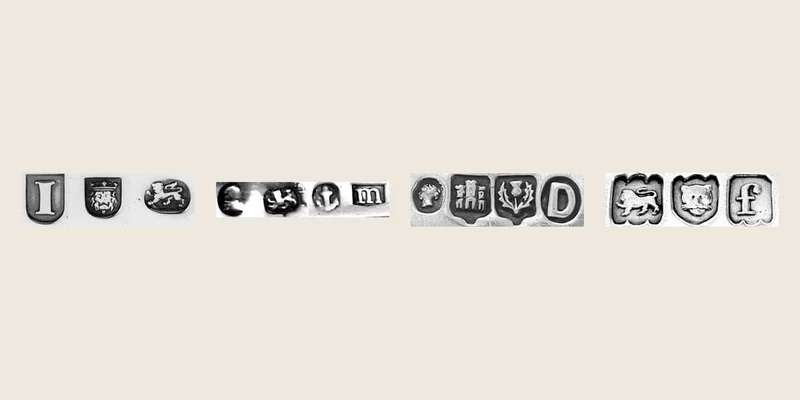
True sterling silver carries official hallmarks struck by a UK Assay Office — principally the lion passant or the numeral 925 (meaning 92.5% pure silver). Silver plate carries manufacturer’s marks instead. The abbreviations stamped onto plated pieces tell you what kind of base metal was used, how thick the plating is, and the quality tier the maker was claiming. (For a side-by-side walk-through of the visible differences, see our sterling silver vs silver plated guide, or the general five-step method in how to identify silver.)

What is EPNS silver? (Electroplated Nickel Silver, explained)
EPNS silver is not silver — it stands for Electroplated Nickel Silver. It's an alloy body of nickel, copper and zinc (containing zero actual silver despite the "nickel silver" name) covered with a thin electroplated layer of real silver. Developed in the 19th century as an affordable alternative to sterling, EPNS became the dominant British silver-plate mark from the 1850s onwards and is the single most common mark you'll find on Victorian and Edwardian silverware. If your piece is stamped EPNS, it is silver plate — not sterling.
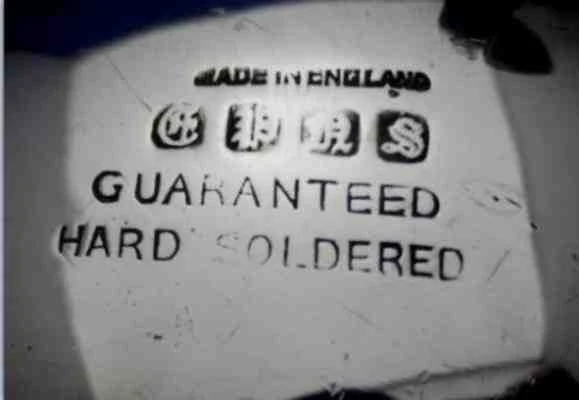
Nickel silver behaves exceptionally well under the plating process: it's hard, takes fine detail, and resists corrosion better than pure copper. That's why manufacturers standardised on it once electroplating replaced Old Sheffield Plate. When EPNS is stamped on a piece, it tells you the body is nickel silver with real silver deposited on top by electroplating. Turn any piece of silver plate over and look at the underside — if it's EPNS, those four letters will be there, often alongside the maker's initials and a pattern number.
What does the A1 silver mark mean?
The A1 silver mark is a 19th-century Sheffield trade grade for silver plate — A1 was the top tier, reserved for pieces receiving the heaviest electroplated silver deposit. It is a plate-quality indicator, not a purity mark. The A1 grade sat above A, B, C, and D, each representing progressively thinner coatings. Only Sheffield plating firms used the A1 grade; you'll almost never see A1 on London- or Birmingham-made pieces.
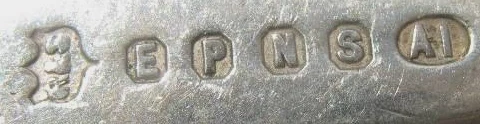
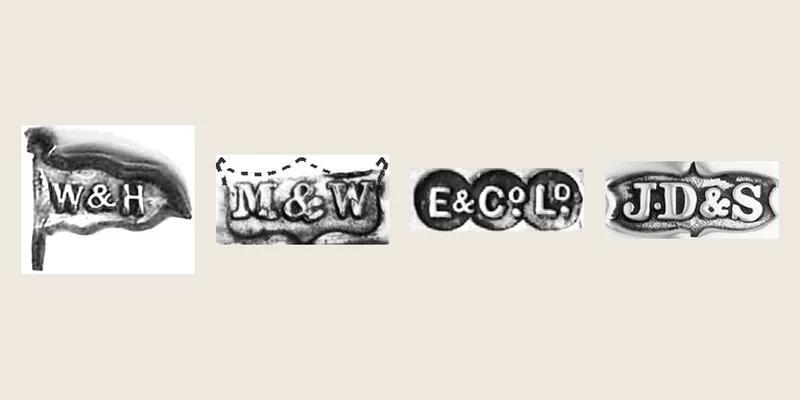
In practice, A1 pieces generally wore better — more silver to wear through before the base metal shows. They are more sought-after by collectors today. A1 pieces from well-known Sheffield makers (Elkington, Walker & Hall, Mappin & Webb) are significantly more collectible than plain EP or unmarked plate.
What is EPBM? (Electroplated Britannia Metal)
EPBM stands for Electroplated Britannia Metal — a pewter-like base metal (Britannia metal) coated with a thin layer of real silver by electroplating. It is silver plate, not sterling silver, and it carries no assay office hallmarks. Individual EPBM pieces are typically worth £10–£50; complete tea services in good condition from respected makers like James Dixon & Sons or Walker & Hall can reach £100–£250 at auction. Heavily worn pieces where the base metal shows through are close to no value.
Britannia metal itself is a pewter-type alloy: roughly 93% tin, 5% antimony, and 2% copper. It’s softer than nickel silver — ideal for spinning and casting hollow forms like teapots, coffee pots, cream jugs, and sugar bowls. The softness that makes it unsuitable for flatware makes it perfect for hollowware, which is why EPBM pieces are almost always hollowware. If you find flatware stamped EPBM, that’s unusual enough to warrant a second look — it may be an early experimental piece, or the stamp has been misread.
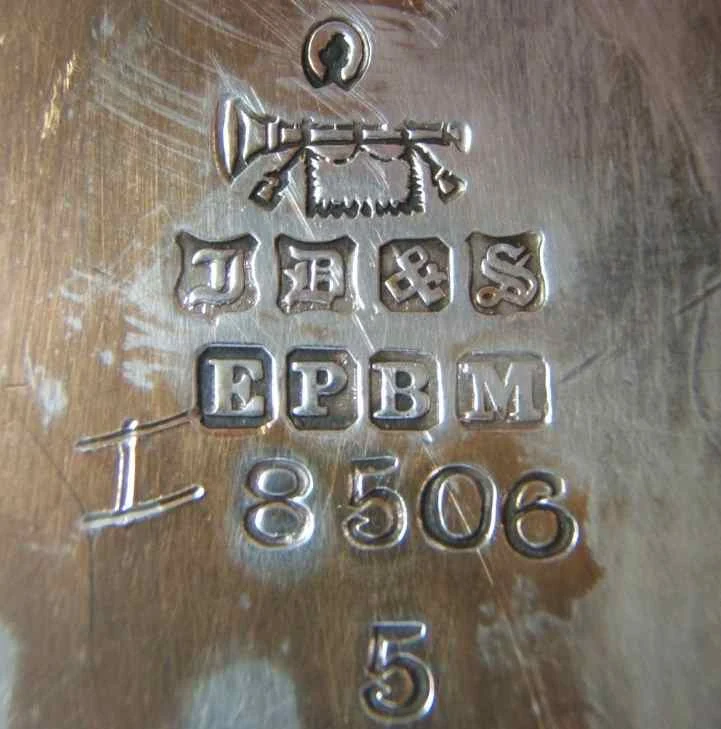
EPBM stays firmly in the plate category — there is no "Britannia standard" sterling under it, in contrast to the confusingly similar Britannia silver standard used for solid silver at 95.8% purity. If you want the full explainer of the underlying 92.5% sterling number and how it’s marked on solid silver, see our guide to what does 925 mean on silver. For the deep dive on EPBM specifically — dating, maker marks and value — see what does EPBM mean on silver.
How electroplating replaced Sheffield Plate
Before electroplating, the dominant technique was Old Sheffield Plate: a thin sheet of silver fused directly onto a copper ingot by heat, then rolled out together under pressure. The result was beautiful but labour-intensive. You can still identify Old Sheffield Plate today by looking at the edges — where the silver rolled over, you can see the copper sandwich beneath.
In 1840, Birmingham firm Elkington & Co. patented commercial electroplating and changed everything. Their process deposited silver from a chemical solution using electrical current — faster, cheaper, and applicable to any shape. After Elkington’s patent expired in the 1850s, the entire Sheffield silverware industry had converted within a decade.

The “EPNS” stamp became legally required after 1896, when pseudo-hallmarks — stamps designed to mimic official sterling silver hallmarks — were made illegal. Manufacturers had to make clear their products were plated, not solid.
Not sure if your piece is silver plate or solid sterling? Upload a photo of the marks and our AI will identify them in seconds — free.
Identify my silver marks →What is EPNS silver worth?
EPNS silver has modest collector value, far below sterling. A single piece — a spoon, a sugar tongs, a single small bowl — typically sells for £5–£30. A complete canteen of cutlery in good condition by a respected maker (Elkington, Mappin & Webb, Walker & Hall) can reach £100–£300 at auction. Heavily worn plate, where the copper or nickel base shows through at the high points, drops back to almost no market value. The same arithmetic applies to EP, A1, and EPBM stamps: the silver layer is microscopic, so worth is driven by maker reputation, condition, and how complete the original set is — not by the metal itself. For a deeper look at how those numbers compare against solid silver, see our sterling silver vs silver plated guide, or the full valuation framework used on sterling pieces in how much is my antique silver worth.
How to date EPNS and EPBM pieces
Unlike sterling silver, silver plate carries no date letters from an Assay Office. But you can still narrow things down considerably.
Before 1896: look for pseudo-hallmarks — lion passant lookalikes, anchor shapes, or fake date letters. Their presence points squarely to pre-1896 manufacture. After 1896, EPNS or EPBM will appear explicitly. If you’re trying to tell whether an unmarked piece is real sterling or a convincing plate reproduction, our guide to how to spot fake silver walks through the magnet, ice, weight and acid tests you can run at home in a few minutes.
Pattern numbers: Large manufacturers like Elkington, Mappin & Webb, and Walker & Hall maintained detailed pattern books. These are held today at Sheffield Archives and the Victoria & Albert Museum, and can sometimes pinpoint a piece to within a few years. For Walker & Hall's Pegasus mark and Mappin & Webb's M&W trademark specifically — the two most common sterling + plate maker marks you’ll meet — see our guide to Walker & Hall and Mappin & Webb silver marks.
If the letters on the base are worn or hard to read, our silver hallmark identifier reads plate marks (EPNS / EP / A1 / EPBM) as well as sterling hallmarks — upload a close-up and it names the mark, the manufacturer where identifiable, and the likely period. Free to try.
Got other silver at home?
Your first appraisal is free with a free account — no credit card. If you have other pieces — hallmarked cutlery, inherited silver, marks you don’t recognise — upload a photo. Some pieces turn out to be genuinely valuable sterling by a named maker, and worth many times what plate is.
Get my free appraisal →Takes ~3 minutes. Full PDF report included.
Frequently asked questions
What does EPNS mean?
EPNS stands for Electroplated Nickel Silver. It is a nickel-copper-zinc base metal (containing no actual silver despite the name) with a thin coating of real silver — typically 10–40 microns — deposited over the top by electrolysis. EPNS is silver plate, not sterling silver, and carries no British assay hallmarks. A complete canteen of EPNS cutlery contains only a few grams of real silver.
Is EPNS real silver?
Not in any meaningful sense. EPNS pieces have a layer of real silver over the top, but the layer is 10–40 microns thick — a few grams per canteen at most. The body of the piece is nickel-copper-zinc alloy. For scrap or melt value, EPNS is effectively worthless; its value comes from design, maker and condition, not from the silver content.
What does A1 mean on silver plate?
A1 is the highest Sheffield plating-quality grade. It tells you the manufacturer applied the heaviest standard silver deposit — more silver than pieces stamped A, B, or a lower grade. A1 is still silver plate, not sterling, but it's the best grade of plate from makers who used this scale (notably Walker & Hall and other Sheffield firms). A1 pieces generally wear better and are more collectible than plain EP.
What does EPBM mean?
EPBM stands for Electroplated Britannia Metal. The base is Britannia metal — a pewter-like tin alloy of roughly 93% tin, 5% antimony and 2% copper — with a thin layer of real silver deposited over it by electrolysis. EPBM is silver plate, not sterling silver. It is almost exclusively used on hollowware (teapots, coffee pots, cream jugs) because the tin base is too soft for flatware.
Is EPNS worth anything?
EPNS has modest collector value — far less than sterling. Complete sets in good condition from known makers (Elkington, Mappin & Webb, Walker & Hall) can fetch £50–£200 at auction. Individual pieces are usually £5–£30. Worn plating with copper showing through significantly reduces value.
How do I tell EPNS from sterling silver?
Sterling silver carries official hallmarks struck by a UK Assay Office: a lion passant, an office mark (anchor for Birmingham, crown for Sheffield), a date letter, and a maker's mark. EPNS shows the "EPNS" stamp instead. No lion passant = not sterling.
What were pseudo-hallmarks?
Before 1896, some manufacturers stamped silver plate with marks designed to resemble official sterling hallmarks — a lion passant lookalike, or an anchor symbol. The Merchandise Marks Act made these illegal and required manufacturers to stamp EPNS or equivalent clearly instead.
925s.ai provides AI-assisted appraisals for informational purposes. For certified valuations, consult an accredited appraiser.
Continue Reading