Silver Knowledge · 7 min read · March 2026
Sterling Silver vs Silver Plated: 5 Instant Ways to Tell the Difference
Last updated
The Quick Answer
Sterling silver is a solid alloy of 92.5% pure silver, stamped 925, "Sterling", or with a British lion passant hallmark. Silver plated pieces are cheaper base metal (copper, brass, or nickel) with a thin coating of real silver on top, stamped EPNS, EP, A1, or EPBM. The fastest way to tell them apart is to read the marks on the base — if you see 925 or a lion passant it’s sterling; if you see EPNS it’s plate.
Three-second version: read the mark. In sterling silver vs silver plated, the marks settle 90% of cases without a single physical test. When the marks are worn or missing, you have four fallback tests — magnet, weight, wear points, and the ping test — that resolve the rest in under five minutes. This guide walks through all five in order, gives you the comparison table, and closes with what each is actually worth.
| Sterling Silver | Silver Plated | |
|---|---|---|
| Marks | 925, .925, "Sterling", lion passant | EPNS, EP, A1, EPBM, "Silver Plate" |
| Composition | 92.5% pure silver, solid throughout | Thin (5–30 micron) silver layer over base metal |
| Base metal | None — silver all the way through | Copper, brass, nickel silver, or Britannia metal |
| Magnet response | Non-magnetic | Often magnetic (base metal is ferrous on cheaper plate) |
| Weight / feel | Dense; heavier than expected for size | Lighter; often feels slightly hollow |
| Wear pattern | Uniform tarnish; polishes bright | Different-coloured base metal shows at high-contact points |
| Sound | Rings clearly when tapped (1–2 second note) | Dull thud — base metal dampens vibration |
| Value range | £100 – £10,000+ (maker premium) | £5 – £300 (mostly decorative) |
What is the difference between silver plated and sterling silver?
The difference between silver plated and sterling silver is composition. Sterling silver is a solid metal alloy that is 92.5% pure silver throughout — every gram of a sterling piece contains 0.925 g of actual silver. Silver plated pieces are a base metal (copper, brass, or nickel silver) coated with a microscopically thin (5–30 micron) layer of real silver applied electrochemically. Break a sterling piece in half and both halves are silver; break a plated piece in half and you see the base metal core.
Because of that composition difference, sterling silver has real weight-based value tied to the silver spot price, holds its colour and shine through decades of use, and carries official assay-office hallmarks (925, lion passant, or "Sterling"). Silver plated pieces have decorative value only, wear through at high-contact points to reveal the base metal beneath, and carry manufacturer stamps like EPNS, EP, A1, or EPBM rather than assay hallmarks. Both look identical when new; the marks and the wear pattern are what tell them apart.
How to tell sterling silver from plated silver: 5 tests you can do at home
These five checks take under five minutes together. Run them in order: if the hallmark test resolves the question, you’re done. If not, each subsequent test raises or lowers confidence until you’re sure.
Test 1 — Read the hallmarks
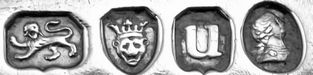
The single most reliable test, and the one that resolves most cases in seconds. Turn the piece upside down and look for stamped marks: on the base of hollowware (teapots, jugs, candlesticks), on the back of a handle, on the underside of a foot rim, inside a ring shank. A jeweller’s loupe helps, but a smartphone macro shot usually works.
Sterling silver carries one of these:
- 925 or .925 — the international numeral for 92.5% silver
- "STERLING" — common on American and export silver
- Lion passant — a walking lion on British silver, the classic hallmark
- 800, 830, 900, 950 — Continental European standards, still solid silver at lower purity
Silver plated pieces carry one of these instead:
- EPNS — Electroplated Nickel Silver (the most common British and Sheffield plate mark)
- EP — Electroplated (generic, base metal unspecified)
- A1 — Sheffield’s highest plating-quality grade (A1 > A > B)
- EPBM — Electroplated Britannia Metal (a pewter-like base, usually hollowware)
- "Silver Plate", "Triple Plate", or a maker name with no purity number
British hallmarked silver carries a cluster of four stamps — town mark, lion passant, date letter, and maker’s initials. If you’re looking at four small symbols in a row, our full guide to reading British silver hallmarks decodes each one.
Test 2 — The magnet test
Sterling silver is completely non-magnetic. So is any real silver, including plated pieces. But the base metal under cheap plate is often ferrous — particularly on modern mass-market pieces and outright fakes.
Hold a strong neodymium magnet (a small hardware-store button magnet is plenty) close to the piece. If the item is drawn firmly toward the magnet, it contains ferrous base metal — ruling out sterling and confirming plate (or an outright fake). If nothing happens, the base metal is copper, brass, or nickel silver — which still doesn’t confirm sterling on its own, but rules out the cheapest fakes.
Test 3 — The weight test
Sterling silver is denser than the base metals used in plating: 10.5 g/cm³ for silver vs. roughly 8.9 for copper or 8.8 for nickel. A sterling teapot, candlestick, or heavy flatware piece has an unmistakable heft — it feels heavier than you expect for its size. Silver plate over lighter base metal (particularly EPBM over Britannia metal) feels light, sometimes slightly hollow.
This test is subjective and calibrates with experience. Two easy ways to build the reference: (1) pick up known sterling at an antique fair — museum-quality Victorian flatware is instructive; (2) compare a modern sterling ring with a costume-jewellery equivalent, since the density difference is unmistakable at small scale.
Test 4 — Check the wear points
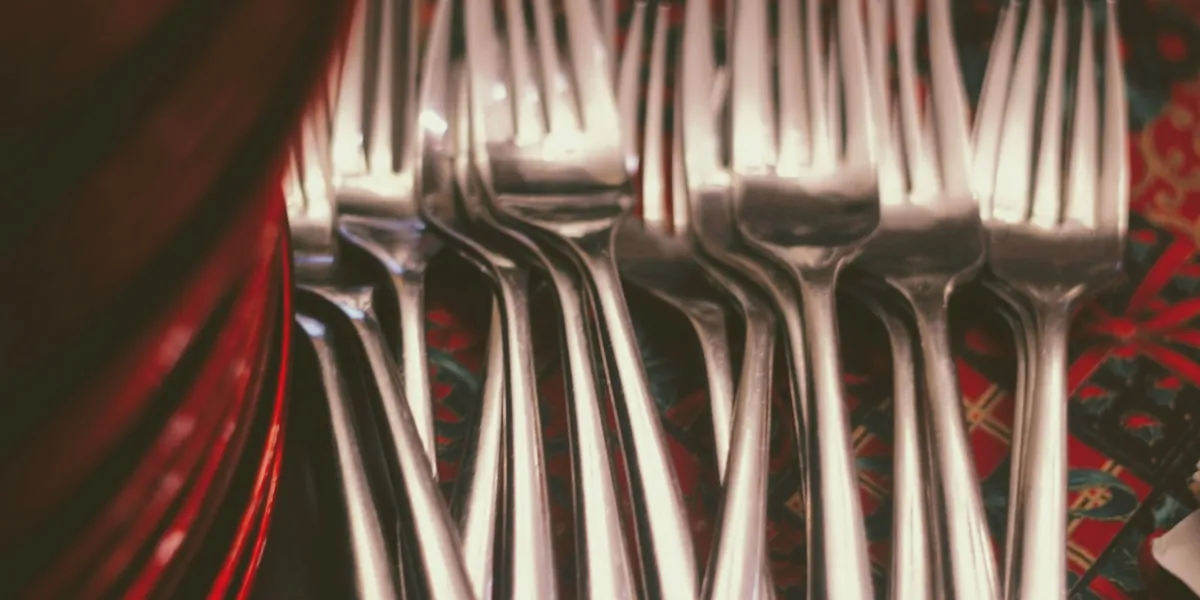
The most reliable non-mark test on used flatware and hollowware. Silver plate is a coating — typically only 5–30 microns thick — over a base metal core. That coating wears through first at the points of highest contact: the backs of spoon bowls, the tines of fork ends, the edges of knife blades, the feet of teapots and candlesticks, and any raised decoration where fingers touch.
Where the coating has gone, you’ll see a different-coloured metal underneath. Yellowish means copper. Pinkish means copper-heavy alloy. Grey or slightly greenish means nickel silver. Whatever the colour, if it’s not silver — the piece is plated.
Sterling silver has no base metal to expose. Wear on sterling simply reveals more silver — the colour stays uniform. A well-used Georgian sterling spoon may show softened detail, but the exposed metal at the wear points is still silver-coloured.
Test 5 — The ping (or ring) test
Sterling silver has excellent acoustic resonance. Tap the piece gently with a fingernail or the side of another metal object — a coin works well on flatware, a knife blade against a teapot rim works on hollowware. Sterling produces a clear, sustained note that rings for a full second or two before fading.
Silver plate over base metal produces a duller, shorter thud. The base metal — copper, brass, or Britannia metal — dampens the vibration and kills the ring. This test works best on hollowware (bowls, teapots, mugs) and less well on flatware, where the shape doesn’t sustain resonance.
Marks worn beyond reading? Upload a close-up and our silver hallmark identifier reads them — sterling or plate, maker where identifiable, likely period — in seconds. Free to try.
Read my marks now →What the marks actually mean
Once you can spot the difference between a sterling stamp and a plate stamp, it’s worth understanding what each one is telling you. Every mark encodes specific information about the piece: purity, origin, maker, and (in the British system) year of manufacture.
Sterling silver marks
The numeral 925 is a millesimal fineness mark: 925 parts silver per 1,000 by weight, or 92.5%. This is the international sterling standard used on American, modern British, and export silver. For a deeper look at what the 925 stamp encodes and what it doesn’t — the biggest misconceptions readers have about it — see our full explainer of what does 925 mean on silver.
The lion passant is Britain’s pictorial equivalent. Introduced in 1544, it certifies the same 92.5% sterling standard using a walking lion instead of a number. Alongside it you’ll find the town mark (leopard’s head for London, anchor for Birmingham, crown or White Rose for Sheffield, castle for Edinburgh), a date letter, and the maker’s initials.
Continental European silver uses lower-numeral fineness marks — 800, 830, 900, 950 — corresponding to 80%, 83%, 90%, and 95% silver respectively. All are still solid silver throughout; only the purity is lower than sterling.
Silver plate marks
| Mark | Full meaning | What’s underneath |
|---|---|---|
| EPNS | Electroplated Nickel Silver | Nickel-copper-zinc alloy (no actual silver in the alloy despite the name) |
| EP | Electroplated | Base metal unspecified — typically copper or brass |
| A1 | Sheffield quality grade (highest) | Heaviest silver deposit; still plate, just better plate |
| EPBM | Electroplated Britannia Metal | ~93% tin pewter-type alloy; usually teapots, jugs, hollowware |
| Silver Plate | Generic plated mark | Base metal, thin silver layer, no assay standard |
| Sheffield Plate | Pre-1840 fused-silver method | Copper core with fused silver skin — genuinely collectible |
Watch for names that sound like sterling but aren’t: "Nickel Silver", "German Silver", and "Alpacca" all contain zero actual silver despite the name. They’re nickel-copper-zinc alloys sometimes plated with real silver, sometimes not. Our full guide to EPNS, EP, A1 and EPBM silver plate marks breaks down each one and covers how to date them.
Which is worth more — and by how much?
Sterling silver is worth substantially more than silver plate — on average an order of magnitude more per equivalent piece. Two things drive the gap: intrinsic metal value and collectibility. Sterling has real weight-based silver content that can be melted or resold against the spot price; plate’s silver layer is measured in microns and has essentially no melt value.
What sterling silver is worth
Sterling silver has a hard floor set by the current silver spot price. At today’s spot, a sterling silver piece is worth roughly £1.27/g of sterling silver as scrap. A 400-gram sterling teapot has a floor value around £509 in metal alone. Above that floor comes the maker premium:
- Anonymous or generic sterling — sells at or slightly above melt value
- Recognisable Victorian / Edwardian makers (Mappin & Webb, Elkington sterling lines) — 1.5–3× melt value
- Georgian or top-tier makers (Paul Storr, Hester Bateman, Tiffany & Co.) — 5–20× melt value; five-figure prices for complete services
Our full guide to how much is my antique silver worth walks through the maker-plus-condition-plus-completeness formula for putting an actual number on a piece — including a worked example on an Edwardian Elkington teapot.
Is silver plated silver worth anything?
Yes, silver plated silver is worth something — but typically 10–50 times less than the sterling equivalent. Silver plate has essentially no melt value because the silver layer is microscopically thin. Its value comes entirely from design, maker, condition, and completeness — not from silver content. Individual worn pieces can be worth almost nothing; complete sets from famous makers can reach several hundred pounds at auction.
Here's what silver plated pieces typically fetch at UK auction and on the secondary market:
- Individual EPNS pieces — typically £5–£30 (a spoon, a sugar tongs, a small bowl)
- Complete EPNS sets in good condition from top makers (Elkington, Mappin & Webb, Walker & Hall) — £100–£300 at auction
- Christofle and WMF design pieces — frequently £100–£800 depending on pattern and period
- Old Sheffield Plate (pre-1840) — the exception: genuinely collectible, can rival mid-tier sterling at £200–£1,000+
- Heavily worn plate with base metal showing at the high points — often near zero collector value
So if you inherited a silver plated tea service and want to know whether it's worth keeping: check the maker mark. A Walker & Hall or Mappin & Webb EPNS service in complete, unworn condition is worth the shelf space and often more than most people expect. An unmarked, worn service almost never is.
The rule of thumb
Worried a piece has been misrepresented? Our guide to spotting fake silver covers the seven tests we use to flush out pieces pretending to be more than they are — including the acid test and pseudo-hallmark detection.
Sterling silver vs silver plated — the summary
If you take one thing from this guide, take this: the difference between sterling silver and silver plated is settled by the marks stamped on the base 90% of the time. See 925, "Sterling", or a lion passant and you have sterling silver — a solid 92.5% silver alloy with real weight-based metal value and often a maker premium on top. See EPNS, EP, A1, EPBM, or "Silver Plate" and you have a base metal piece with a thin silver skin — decoratively lovely, but worth a fraction of the sterling equivalent.
When the marks are worn or missing, four fallback tests resolve the rest: a magnet will stick to cheap-plate base metal but never to sterling; sterling feels denser than expected for its size; wear at the high points reveals different-coloured base metal on plate but stays silver-coloured on sterling; and sterling rings clearly when tapped while plate produces a dull thud. Any two of those in combination will give you a confident answer in under five minutes.
Sterling or plate? Find out for sure.
Your first appraisal is free with a free account — no credit card. Upload a photo — our AI reads the marks, confirms sterling vs. plate, identifies the maker where possible, and gives you a market value with comparable auction results.
Get my free appraisal →Takes ~3 minutes. Full PDF report included.
Frequently Asked Questions
Is silver plated worth anything?
A little. Most silver plate has decorative rather than metal value — usually £5–£50 for individual pieces. Complete sets in good condition from top-tier makers (Elkington, Mappin & Webb, Christofle) can reach £100–£300 at auction. The silver layer itself is only 5–30 microns thick so it has no meaningful melt value; you're paying for design, maker and condition. Pre-1840 Sheffield Plate is the exception — genuine Sheffield Plate is collectible and can rival mid-tier sterling.
How can you tell if silver is real?
Three quick checks that settle it in under a minute. First: look for a hallmark — 925, .925, "Sterling", or the British lion passant means solid sterling silver; EPNS, EP, A1, EPBM or "Silver Plate" means it's plated. Second: hold a magnet close — real silver is non-magnetic, so a strong pull means base metal underneath. Third: check the wear points (backs of spoons, fork tines, edges) — silver plate reveals a different-coloured base metal where the coating has worn through, while sterling is silver all the way through.
Does a magnet stick to sterling silver?
No. Sterling silver is completely non-magnetic — a strong neodymium magnet will not stick to it or noticeably attract it. If a magnet clings to a piece marked "silver", it contains ferrous base metal and is either silver-plated over steel or an outright fake. A weak or absent magnetic response doesn't prove sterling on its own (copper and brass are also non-magnetic), but a positive magnetic response definitely rules it out.
What does EPNS mean?
EPNS stands for Electroplated Nickel Silver. It's a marker of silver plate, not solid silver: a nickel-copper-zinc base metal (which contains no actual silver despite the name "nickel silver") with a thin layer of real silver deposited on the surface by electroplating. EPNS pieces carry no lion passant and no British assay office mark. Value is modest — £5–£50 for individual pieces, up to a few hundred pounds for complete sets by respected makers.
925s.ai provides AI-assisted appraisals for informational purposes. For certified valuations, consult an accredited appraiser.
Continue Reading