Silver Knowledge · 7 min read · July 2026
Sterling Silver Tea Set with Tray Value: What It’s Worth in 2026
Last updated
The Quick Answer
A complete sterling silver tea set with matching tray typically sells for £1,200–£8,000 at UK auction in 2026. The floor is set by silver weight (a four-piece service plus tray weighs 2–4 kg = £1,200–£2,500 in scrap alone); the ceiling is set by maker, era and condition. Georgian sets by Paul Storr or Hester Bateman reach five figures; anonymous 20th-century sets sit near melt value.
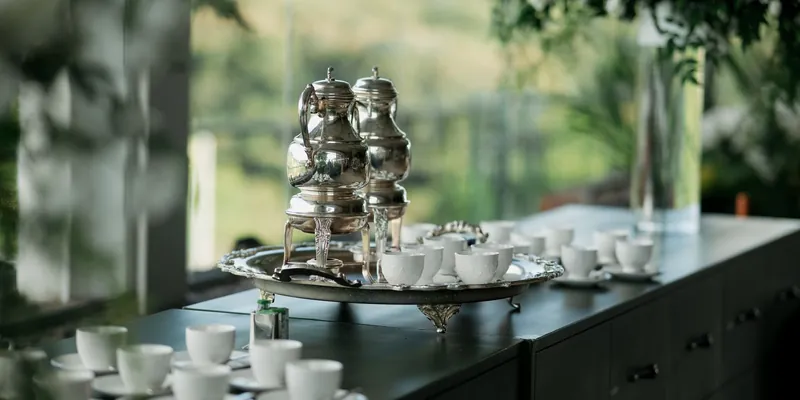
A sterling silver tea set with matching tray is one of the highest-value single silver objects a household typically owns. The reason is simple arithmetic: a full four-piece service (teapot + coffee pot + cream jug + sugar bowl) plus a hallmarked salver weighs somewhere between 2 and 4 kilograms in solid sterling. Even at the melt floor that’s more than a thousand pounds of silver content before any maker premium enters the calculation. This guide walks through the five value drivers, gives 2026 UK auction ranges, and covers the specific traps that lower a set’s value more than most owners expect.
Important first check — is your set actually sterling or silver plate? A plate service with the same dimensions and outward appearance is worth roughly one tenth of the sterling equivalent because plate has no meaningful silver melt value. If the underside of any piece carries EPNS, EP, A1 or EPBM — not a lion passant or 925 — the whole set is plate. Our full guide to EPNS, EP, A1 and EPBM silver plate marks covers what each stamp means and what a plated tea service is worth in 2026.
The five things that decide a sterling silver tea set with tray value
Value on a complete service is a product of five variables, roughly in this order of magnitude:
- Weight in troy ounces — sets the metal floor at today’s spot price
- Maker — multiplies the floor by 1× (anonymous) to 20× (Paul Storr)
- Era + hallmark completeness — Georgian pieces command premiums; missing or worn marks reduce value 20–40%
- Completeness of the set — a matching four-piece + tray is worth more than the sum of the parts sold separately
- Condition — dents, missing lids, damaged handles, wear to engraving all reduce value 10–50%
Weight first: the sterling silver floor
Every sterling piece has a hard floor set by the silver spot price. Sterling is 92.5% silver, and at today’s spot of $63.76/oz troy, sterling has a scrap value of roughly £1.40/g. A typical four-piece service plus tray weighs:
- Small service (spun-bodied, thin gauge, small tray) — 1,600–2,000 g total — melt floor £1,200–£1,500
- Medium service (traditional cast-and-raised bodies, medium tray) — 2,500–3,200 g — melt floor £1,875–£2,400
- Heavy service (heavy Victorian gauge, large tray with engraved rim) — 3,500–5,000+ g — melt floor £2,625–£3,750+
Weigh the set on a kitchen scale before you do anything else. Any dealer or auction estimate should sit at or above the melt floor; if you’re being offered less, the piece is either being priced against a downward-moving spot market or the offer is low. Our full walkthrough on setting a number on a specific piece is in the antique silver valuation guide.
Maker multiplier: 1× to 20×
The maker’s mark is the single largest lever on value above the melt floor. Below are 2026 UK auction ranges for a full four-piece + tray by tier:
- Anonymous / unbranded 20th-century sterling (Sheffield Assay Office, unnamed maker) — sells at or slightly above melt: £1,200–£2,500
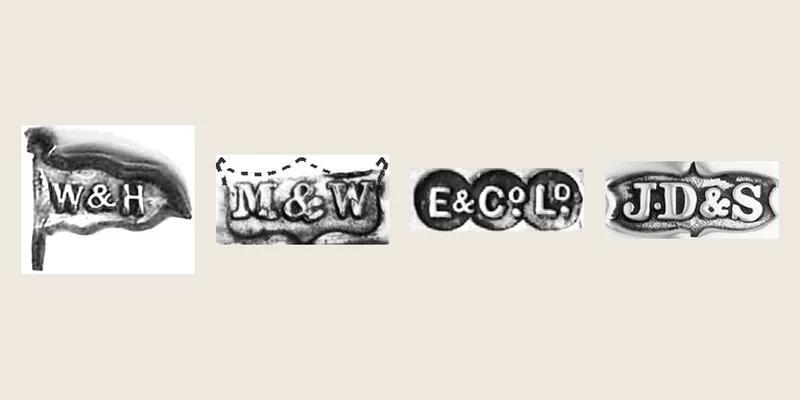
- Recognised Victorian & Edwardian firms (Mappin & Webb, Walker & Hall, Elkington sterling, Hukin & Heath) — 1.5–3× melt: £2,000–£6,000
- Top Regency and Victorian makers (Robert Hennell, Barnard & Sons, John Bridge, Storr & Mortimer) — 3–8× melt: £4,000–£15,000
- Georgian masters (Paul Storr, Hester Bateman, Paul de Lamerie, Rundell Bridge & Rundell) — 8–20× melt: £15,000–£50,000+
- Tiffany & Co, Georg Jensen, Christopher Dresser (sterling) — design-collector market, prices vary widely: £3,000–£20,000+
Look up the maker’s initials at silvermakersmarks.co.uk or use our silver hallmark identifier to read them from a photo. Our post on reading British silver hallmarks covers how to decode the maker’s punch alongside the town, date and standard marks.
Era premium: Georgian > Regency > Victorian > Edwardian > modern
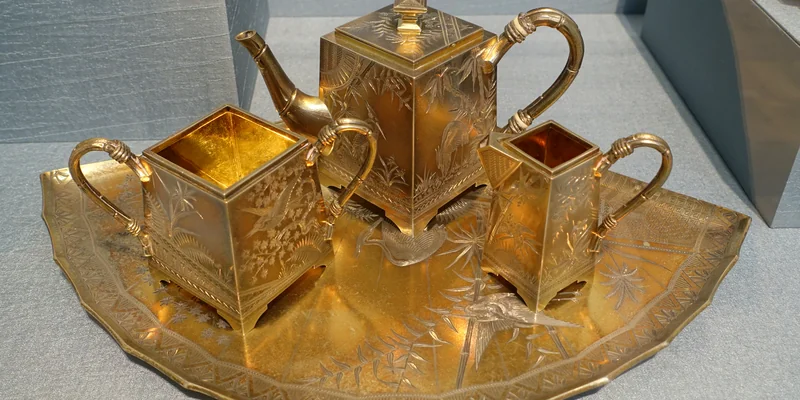
Era shifts value further, usually in that descending order. Georgian silver (before ~1830) is hand-raised and hand-planished; every piece has minor tool marks that machines cannot reproduce. Regency (1811–1820) and William IV (1830–1837) share that hand-made quality and add architectural gravitas. Victorian sets are usually machine-spun with hand-applied ornament, still heavy and often ornate. Edwardian and 20th-century sets are lighter-gauge and less collectible unless they carry an important maker or a notable design association.
To place your set’s era from the marks and style, see our full guide on how to date antique silver: Georgian, Victorian and Edwardian. The duty mark (sovereign’s head, 1784–1890) is the fastest single-mark era clue.
Want the specific number for your set? Upload photos of the base marks and one of the pieces — our AI silver appraisal reads the maker, era, and estimated market value using comparable auction results. Your first appraisal is free with a free account — no credit card.
Value my tea set →Completeness: matched tray adds 25–40%
A four-piece service with a matching tray from the same maker in the same year sells for 25–40% more than the same pieces without the tray. The tray is expensive to make (large, heavy, unbroken sheet of silver) and matching sets rarely survive intact across a century of household use. A non-matching tray of the correct period and style still adds value but at half that premium; a mismatched or later tray adds only the tray’s own weight-based value.
Related pattern: individual pieces broken out of a set (a lone teapot from a broken service) sell at melt to modest premium. Reassembled or "made up" services — where a dealer has bought individual pieces and paired them into a fake matching set — are readable from the hallmarks (different date letters, different maker initials) and command a discount.
Condition: the specific dents and damages that matter
Condition is where owners overestimate value most. What most affects price:
- Missing lids, handles or finials — 30–50% deduction. Replacements are technically possible but destroy the “matched by the maker” claim.
- Dents in bodies or tray — 10–20% deduction per major dent. Small dents can sometimes be pushed out professionally; the bill runs to hundreds of pounds per piece.
- Engraved monograms or crests — if original to the piece, may add value (armorial pieces are collectible); if later or family-added, neutral to slight negative.
- Removed engraving (over-polishing that has scraped away a crest) — 15–30% deduction. The thin spot is visible under raking light.
- Ivory or bone insulator rings on teapot handles — original ivory rings are legally difficult to sell in most Western markets since 2018 CITES changes; expect specialist dealers only, sometimes at reduced prices.
- Repairs to handle sockets — the most common structural failure. Neat professional repairs are acceptable; solder discoloration or lead solder is disqualifying at high price points.
Frequently Asked Questions
How much is a sterling silver tea set with tray worth?
A complete sterling silver tea set with matching tray typically sells for £1,200–£8,000 at UK auction in 2026. The floor is set by silver weight (a four-piece service plus tray weighs 2–4 kg = £1,200–£2,500 in scrap alone); the ceiling is set by maker, era and condition. Georgian sets by top makers like Paul Storr or Hester Bateman reach five figures; anonymous 20th-century sets sit near melt value.
What is the melt value of a sterling silver tea service?
Sterling silver has a scrap value of roughly £1.40/g at current spot prices (silver spot $63.76/oz troy, as of 2026-09-14). A typical four-piece service (teapot + coffee pot + cream jug + sugar bowl) plus tray weighs 2,500–3,200 g total. Weigh the set on a kitchen scale, multiply grams × £1.40 to get its melt floor before any valuation discussion. Heavy Victorian services reach 4,000–5,000 g and correspondingly higher floors.
Does a matching tray add much value to a silver tea service?
Yes — a four-piece service with a matching tray from the same maker in the same year sells for 25–40% more than the same pieces without the tray. The tray is expensive to make (large, heavy, unbroken sheet of silver) and matching sets rarely survive intact across a century of household use. A non-matching tray of the correct period still adds value but at half that premium.
Which sterling silver tea service makers command the highest premium?
Georgian masters — Paul Storr, Hester Bateman, Paul de Lamerie, Rundell Bridge & Rundell — command 8–20× melt value, pushing complete sets to £15,000–£50,000+. Top Regency and Victorian makers (Robert Hennell, Barnard & Sons, John Bridge, Storr & Mortimer) command 3–8× melt. Recognised Victorian and Edwardian firms (Mappin & Webb, Walker & Hall, Elkington sterling, Hukin & Heath) command 1.5–3× melt. Anonymous 20th-century sterling sits at or slightly above melt.
What condition issues most reduce a silver tea set's value?
Missing lids, handles or finials cause 30–50% deductions — replacements destroy the 'matched by the maker' claim. Major dents cost 10–20% each. Removed engraving (over-polishing that has scraped away a monogram) costs 15–30%. Ivory handle insulator rings became difficult to sell after 2018 CITES changes and can limit the buyer pool. Solder repairs at handle sockets are acceptable if neat but disqualifying at top price points.
Conclusion
A sterling silver tea set with tray is worth its weight in silver as the floor, its maker’s reputation as the ceiling, and the specific era and condition of the pieces determine where in that band the actual number lands. The five drivers — weight, maker, era, completeness, condition — each move the price 15–40% independently, which is how identical-looking sets from adjacent generations end up separated by an order of magnitude at auction. Weigh first, read the marks second, look up the maker third; that’s the fastest path to a realistic number before you decide whether to sell, insure, or hold.
To get a specific market estimate on your set with comparable auction results, upload a photo of the base marks and one of the pieces to our AI silver appraisal. Your first appraisal is free with a free account — no credit card.
925s.ai provides AI-assisted appraisals for informational purposes. For certified valuations, consult an accredited appraiser.
Continue Reading