Silver Knowledge · 9 min read · June 2026
How to Value a Silver Tea Service: What Sets the Price
A silver tea service can be worth $80 or $18,000 — and the gap is rarely about luck. Five things decide where any given set lands on that scale, and you can check most of them at the kitchen table in fifteen minutes. This guide walks through what actually moves the price of a silver tea service, in the order an experienced appraiser would look at the set sitting in front of them.
By the end you'll know whether the set you're holding is closer to the $100 plate end of the market or the four-figure (or occasionally five-figure) sterling end, and which two or three details are doing the most work to put it there.
Sterling or silver plate? The single biggest factor
The single biggest fork in the road is material. Sterling silver is 92.5% pure silver alloyed with copper for strength — that silver content is real, weight-based metal value that can be measured against the spot price. Silver plate is a microscopically thin layer of silver deposited over a base metal core (usually copper, nickel or Britannia metal). It has almost no melt value at all and is judged instead on looks, maker and condition.
The result is a real price gap. A solid sterling three-piece tea set in honest condition typically starts around $800–$1,000 even before anyone factors in a maker's premium, because the silver itself is worth that much by weight. A comparable silver-plate set usually sells for $50–$150 unless the maker is one of the big names. So the first question is always: is this sterling, or is it plate? Our guide to sterling silver vs silver plate covers the five reliable tests; the marks on the base of each piece will usually answer it in seconds.

Not sure which one you have? Upload a photo of the marks — our free AI appraisal reads them in seconds and tells you whether your set is sterling or plate.
Try the free AI appraisal on 925s.ai →Read the hallmarks: maker, metal and date
Turn each piece of the service upside down and look at the base. On British silver you'll find a cluster of small stamped marks: the silversmith's initials (the maker's mark), a walking lion (the lion passant, confirming sterling), a town mark for the assay office that tested the piece, and a single letter that pins down the year of hallmarking. American sterling is simpler — usually the word "STERLING" or the numeral "925" stamped on the base. Continental European silver carries fineness numbers like 800, 830, 900 or 950.
Silver plate is marked differently. The most common stamps are EPNS (Electroplated Nickel Silver), EPBM (Electroplated Britannia Metal), A1 (a quality grade) and sometimes "triple plate". Our guide to EPNS, EP, A1 and EPBM marks breaks down what each one means. The maker's mark is what most often turns a service into something more than scrap — a famous name can multiply the value many times over. Reading those marks is genuinely a skill, but a learnable one; our complete guide to reading British silver hallmarks walks through the most common town marks and date letters with examples.

Weight and gauge: why two identical-looking teapots aren't worth the same
You can put two silver teapots side by side that look effectively identical and find one is worth twice the other. The difference is in the gauge — the thickness of the silver sheet the piece was raised from. A typical antique silver teapot weighs anywhere from about 250 grams at the light end to over 1,000 grams for a substantial Georgian or Victorian example. Heavier gauge generally signals a better maker working for a wealthier original buyer, who could afford to pay for more metal.
For sterling pieces, weight matters in two ways at once. It sets the melt-value floor — the minimum the silver content alone is worth at current spot price — and it's a quality signal that helps justify the collector premium on top. Two things to watch for: "weighted" or loaded handles, knobs and finial bases on candlesticks-style pieces, which add mass that isn't silver; and resin-filled handles on later sterling, which are normal but shouldn't be counted toward melt weight.
Completeness: why the missing sugar bowl costs you
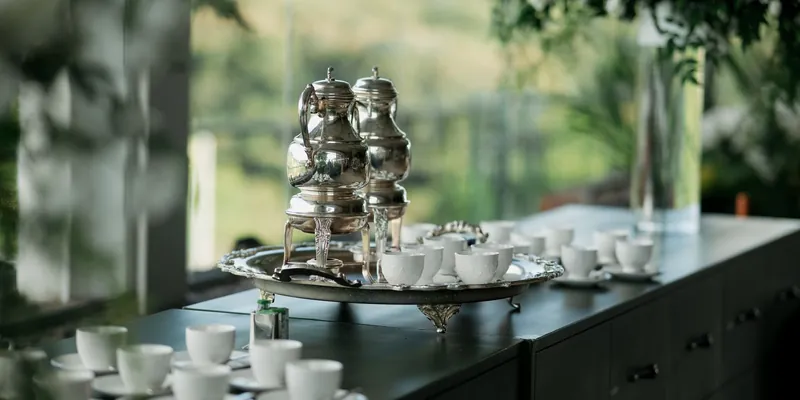
A tea service is worth more whole than in pieces. The minimum service is three: a teapot, a sugar bowl and a creamer. A classic five-piece adds a coffee pot and a waste (or "slop") bowl, and the grandest services add a hot-water pot, a kettle-on-stand and a matching tray. The more original pieces survive together, the more the set is worth — and the closer the pattern, maker and weight match across pieces, the better.
The tray is often the swing piece. A large matching sterling tray can weigh as much as the rest of the service combined, which is a significant lump of metal value on top of any collector premium. A missing tray, or worse, a substitute tray from a different maker, drags the value of the whole set down disproportionately. The same goes for a mismatched lid, a replaced handle or a creamer from a different pattern: a buyer is paying for an intact service, and any break in that intactness comes off the price.
Condition, era and maker: what tips a set into the thousands
Once you've established material, marks, weight and completeness, what's left is the part that turns a competent set into a remarkable one. Condition first: dents on hollowware, splits at handle joints, worn plating where the silver has rubbed through to the copper base, monogram removal that leaves a thin "ghost" in the metal, and amateur soldering repairs all reduce value. Crisp hallmarks, an original finish and an untouched monogram lift it.
Era matters too. Genuinely old sets — Georgian, Regency, early Victorian — tend to sell for more than later equivalents, and rare patterns command premiums regardless of period. Above all, the maker can dwarf everything else. As one example, a Tiffany & Co. "Chrysanthemum" pattern sterling tea and coffee service from around 1902–07 sold at Bonhams for roughly $57,000 — many times the value of its silver content alone, simply because of the maker and pattern. That's the upper end of the market; the principle scales all the way down. For a deeper look at how all these levers combine across other silver categories, see our complete silver valuation guide.
Frequently asked questions
Are silver tea sets worth anything?
Yes — solid sterling sets have real value from their silver content, often starting around $800–$1,000 even as scrap before any collector premium. Silver-plate sets are usually worth $50–$150 and are valued mainly on their looks, maker and condition. The maker's name can lift either far above those figures.
How do I know if my tea set is silver or silver plate?
Check the marks on the base: "sterling", ".925" or a lion passant indicate solid silver, while "EPNS", "EPBM", "A1" or "triple plate" indicate plating. A magnet test helps too — silver is non-magnetic, so if a magnet grips strongly there's base metal underneath. When in doubt, a hallmark or photo-based appraisal settles it quickly.
How many pieces are in a silver tea service?
The minimum is three: a teapot, a sugar bowl and a creamer. A classic five-piece set adds a coffee pot and a waste (slop) bowl, and the largest services add a kettle-on-stand, a hot-water pot and a matching tray. More original pieces — especially the tray — generally mean a higher value.
How much is a sterling silver tea set worth?
Most fall between roughly $800 and several thousand dollars, driven by weight, maker and how complete the set is. Exceptional sets by names like Tiffany or Paul Storr can reach tens of thousands. The silver content sets a floor; the maker and rarity set the ceiling.
Is a silver tea set worth more with the matching tray?
Usually, yes. A matching tray completes the service and can add meaningful value, particularly when it shares the same pattern and maker. A missing tray or mismatched replacement pieces will lower what buyers are willing to pay.
What is the most valuable silver tea service?
Services by elite silversmiths command the highest prices. As one example, a Tiffany & Co. "Chrysanthemum" sterling tea and coffee set sold for about $57,000 at Bonhams — many times the value of its silver alone.
Putting it all together
Five things set the price of a silver tea service: whether it's sterling or plate, what the hallmarks say about maker and age, the weight and gauge of the metal, how complete the set is, and the condition and pedigree of the pieces. Three of those you can check at the table in a few minutes; the other two reward a little research into the maker's mark. Together they'll tell you whether your set is closer to the $100 end or the $10,000 end of the market.
Curious what your set is really worth?
Upload a photo and let our free AI appraisal read the marks for you — sterling vs plate, maker, era, and an estimated value range in minutes.
Get a Free Appraisal →925s.ai provides AI-assisted appraisals for informational purposes. For certified valuations, consult an accredited appraiser.
Continue Reading