Silver Knowledge · 9 min read · April 2026
How Much Is My Antique Silver Worth? A Complete Valuation Guide
If you've ever wondered how much your antique silver is worth, you're not alone. Whether you've inherited a canteen of cutlery, discovered a hallmarked teapot at the back of a cupboard, or picked up a handsome piece at auction, the question of value is rarely straightforward. Antique silver sits at the crossroads of precious metal and cultural object — and both sides of that equation matter. The answer depends on three core factors: the silver content, the maker, and the condition. This guide walks you through each one, so you can form a realistic picture of what your piece might fetch — whether you're selling, insuring, or simply curious.
Start with the Silver Content
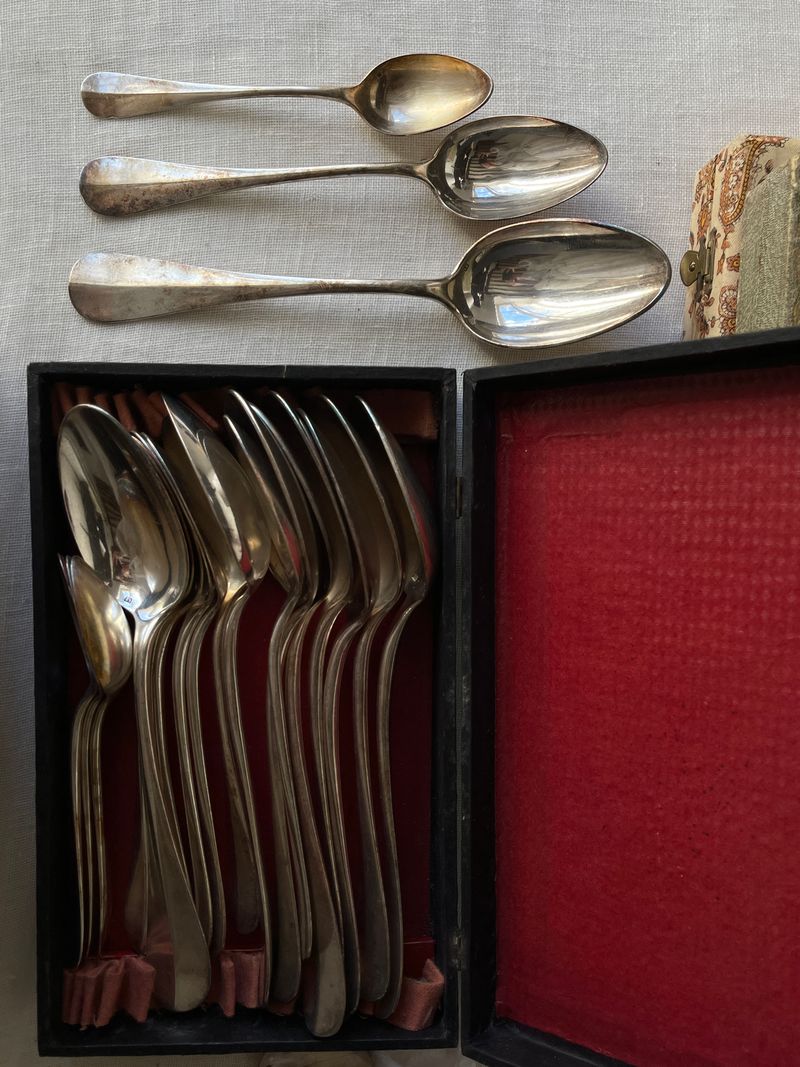
The foundation of any antique silver valuation is the metal content. Sterling silver — the standard used for most British and American flatware and hollowware — is 92.5% pure silver, with the remaining 7.5% typically copper added for durability. This is why you'll see the mark "925" or the word "Sterling" on qualifying pieces. Other standards exist: Britannia silver (95.8% pure, marked 958 or with a Britannia figure), continental silver (often 800 or 835 parts per thousand), and coin silver (90%).
To calculate the baseline melt value of any piece, weigh it in grams, divide by 31.1035 to convert to troy ounces, multiply by the silver purity as a decimal, then multiply by the current silver spot price. A 300-gram sterling teapot, for example, contains roughly 8.93 troy ounces of fine silver — worth around £210–£270 at typical spot prices. That melt value is the floor. Everything above it comes from the piece's history and identity.
How British Hallmarks Add Certainty — and Value

Britain's hallmarking system dates back to a statute of Edward I in the late 13th century — making it one of the oldest consumer protection laws in the world, with over 700 years of continuous operation. For collectors and valuers alike, a full set of British hallmarks is effectively a passport for the piece.
A complete British hallmark typically contains four marks: the maker's mark (the silversmith's registered initials or device), the standard mark (a lion passant walking right for 925 sterling; a seated Britannia figure for 958 standard), the assay office mark (a crowned leopard's head for London; an anchor for Birmingham — the Birmingham and Sheffield offices were established by Act of Parliament in 1773 — and a castle for Edinburgh), and the date letter (a letter in a specific typeface that corresponds to a particular year).
Taken together, these marks tell you exactly where a piece was assayed, what year, and by whom — all of which feed directly into its value. A fully hallmarked piece commands significantly more confidence from buyers than an unmarked one. If you're not sure what a 925 stamp or lion passant means, our guide to the 925 mark explains every major hallmark system worldwide.
The Maker Multiplier — When a Name Changes Everything
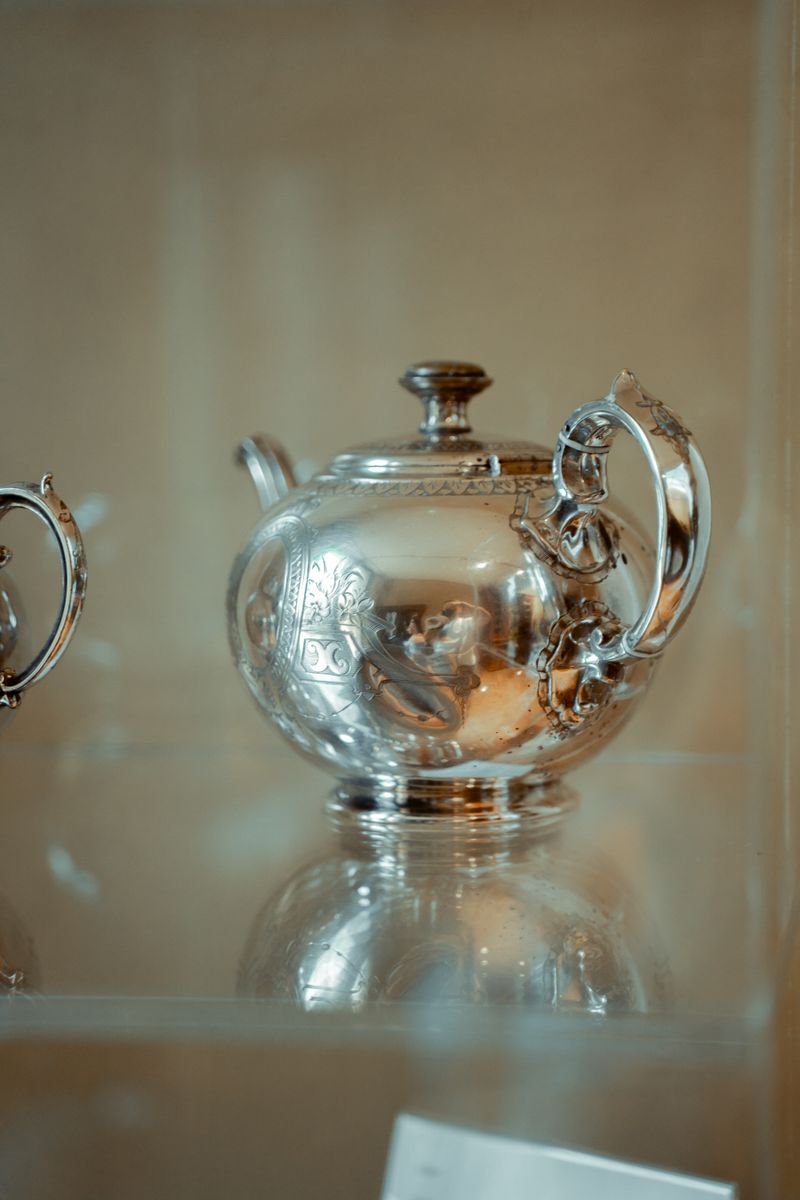
Silver purity tells you what something is worth at minimum. The maker's name tells you what it could be worth at maximum — and the gap between those two figures can be enormous.
Paul Storr, working in London from the 1790s into the 1830s, is widely regarded as the greatest English silversmith of the 19th century. His clients included King George III and King George IV. A Victorian candelabrum by Storr sold at Sotheby's London in 2025 for $124,235. The silver content alone would have been worth a small fraction of that.
Among American silversmiths, Gorham, Tiffany & Co., and Georg Jensen occupy comparable positions. Pieces from these makers typically command 2× to 2.5× their melt value at minimum, with rare patterns or complete services running far higher. Even lesser-known but respected makers — Hester Bateman, Paul de Lamerie, Robert Garrard — consistently outperform anonymous pieces of equivalent weight. If your piece has a clear maker's mark, identifying it accurately is the single most important step in understanding its true value.
Wondering what your specific piece is worth? Upload a photo — get a market value estimate with comparable auction results in under 3 minutes. Free.
Appraise my piece →Why Condition Is More Nuanced Than It Looks
Condition matters in silver valuation, but not always in the ways you might expect. A piece with original surface patina — the gentle oxidation that settles into engraved details — is often more desirable to serious collectors than one that has been aggressively polished. Over-polishing wears away hallmarks, removes the depth from chasing work, and signals a piece has been handled carelessly.
What genuinely reduces value: significant dents, cracks, or splits; repairs with solder visible to the eye; replacement parts (a later handle on an early body, for instance); personalised engravings like initials or crests from unknown families (though armorial engravings from notable families can sometimes add interest); and incomplete sets. A full canteen of flatware in original order is worth considerably more than the same number of pieces sold separately.
What adds value beyond condition: the original fitted case (especially if the silversmith's name is stamped inside the lid), any documentation of provenance, and exhibition history.
Sterling vs. Silver Plate — Know the Difference
One of the most common sources of confusion in antique silver is the difference between solid sterling and silver plate. Marks like EPNS (electroplated nickel silver), EP, A1, EPBM, and similar designations indicate a base metal — usually nickel or copper — that has been coated with a thin layer of silver by electrolysis. The result looks identical to sterling but contains almost no silver by weight.
The melt value of silverplated items is negligible. Their worth, if any, is as decorative antiques — and even there, value depends heavily on the maker and condition of the plating. Note that some well-known names caused lasting confusion: 1847 Rogers Bros., for instance, is a silverplate brand despite its official-sounding name.
The reliable tests: look for "925", "Sterling", or a lion passant. If you see "EPNS" or any of the plating marks, the piece is not solid silver. Our earlier guide to hallmark reading covers this in more detail.
How to Get an Antique Silver Valuation — and What Type You Need

The type of valuation you need depends on why you're asking. For insurance purposes, you need a formal written appraisal from a qualified valuer — one that gives a replacement value (typically higher than market value). For selling, you want a realistic market valuation; auction estimates, dealer offers, and private sale prices will all differ. For probate or estate purposes, you'll need a specialist who can work to the relevant legal standard.
For a quick informal assessment — whether you've found something and want to know if it's worth pursuing further — the melt value calculation described above gives you the floor. Checking recent auction results for the maker or pattern gives you a ceiling. The distance between them is where your piece probably sits.
If you'd rather skip the detective work, tools like 925s.ai can identify hallmarks from a photograph and provide instant guidance on what you're looking at — a useful first step before you decide whether a professional appraisal is warranted.
Conclusion
Valuing antique silver is part chemistry, part history, and part market knowledge. The silver content sets the floor; the maker, condition, and completeness determine how far above it a piece can reach. A modest hallmarked teaspoon and a Paul Storr epergne might both be sterling, but they inhabit entirely different worlds of value.
If you have a piece and want to understand what you're holding, start by photographing the hallmarks clearly and uploading them to 925s.ai — our free AI appraisal tool will identify the marks, date the piece, and give you a starting point for your research. It takes thirty seconds and costs nothing.
Have a piece of silver at home?
Upload a photo and get an instant AI appraisal — hallmark identification, maker history, auction comparables, and estimated value. Free to start.
Get a Free Appraisal →925s.ai provides AI-assisted appraisals for informational purposes. For certified valuations, consult an accredited appraiser.